
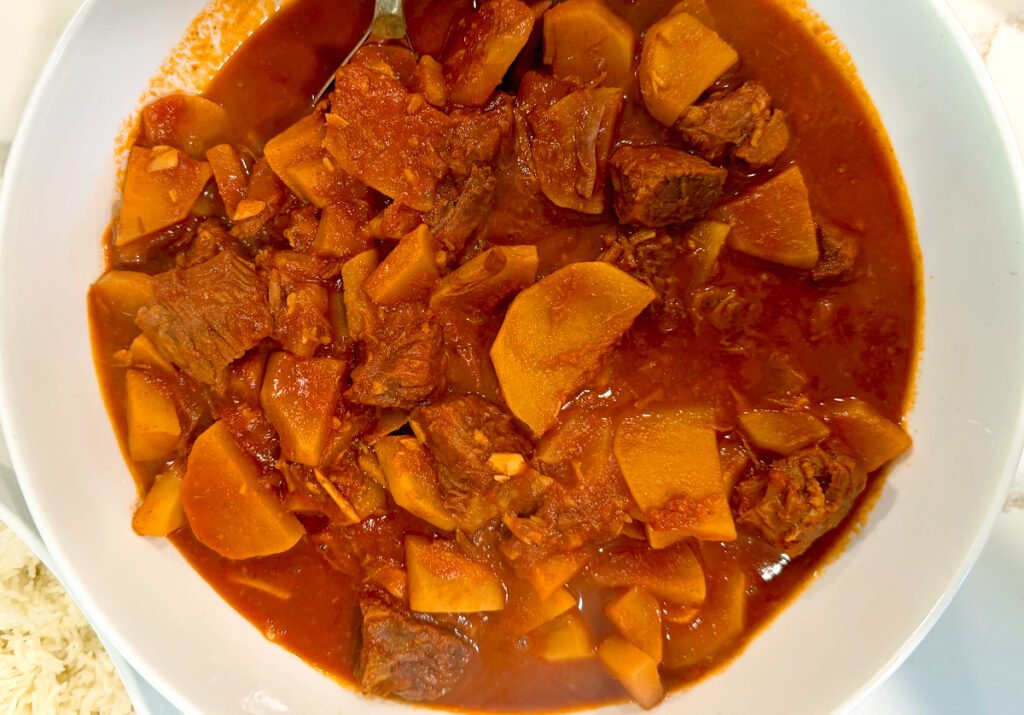
Sugar and vinegar could never do what date syrup and lemon do. The silan goes in early and takes the whole pot dark and sweet. The lemon goes in at the very last second and cuts straight through it. Root food — nine turnips, twelve cloves of garlic, and something you’re still thinking about two days later.
Ingredients
The Stew
- 3 lb chuck roast, cut into cubes
- 3 Tbsp olive oil
- 12–13 cloves garlic
- 6–7 cups turnips (about 9), peeled and cut into wedges
- 12 oz tomato paste (two 6 oz cans)
- 2–3 tsp salt
- 5–6 cups reserved beef broth, enough to cover
- ½ cup silan (date syrup)
- Juice of 2 lemons
- ¼ tsp cayenne
To Serve
- Basmati rice, cooked separately
Instructions
- Cook the beef. Simmer the cubed chuck roast in plain water until tender — a pressure cooker, or 1½ to 2 hours on the stove. Reserve all the broth.
- Brown the garlic. Heat the olive oil and sauté the garlic until slightly browned.
- Brown the turnips. Add the turnip wedges and brown them 5 to 10 minutes.
- Tomato paste and salt. Stir in the tomato paste, add the salt, and keep sautéing. You want real color on the turnips, not just softened edges.
- Add the broth. Pour in enough of the reserved broth to cover. Cook until the turnips are al dente, at least 45 minutes.
- Silan. Stir in the silan and let it stew. The pot should take on a deep, dark color.
- Return the beef. Add the reserved chuck roast and cook on until the turnips are fully tender.
- Finish. Stir in the lemon juice, then the cayenne.
- Serve. Over basmati rice.
The lemon goes in at the very end — added early it loses that bright, crisp lift. Taste before you serve and adjust: it should land a little sweeter than sour.